

Florence rewards visitors who slow down and plan around a handful of unmissable sights: Michelangelo’s David, the Duomo’s record-breaking dome, the Uffizi Gallery, and the sunset view from Piazzale Michelangelo. Here are the ten places and experiences worth building your Florence days around, based on an au pair’s actual visits rather than a generic checklist.
Key Takeaways
- Florence’s biggest draws — the Accademia and the Uffizi — are both closed on Mondays, so plan your week around that before booking anything else.
- Book tickets for the David and the Uffizi ahead of time; both museums draw long lines, especially in peak season.
- The cathedral is free to enter, but dress modestly — no bare shoulders or short shorts.
- Give the Uffizi its own day if you can; rushing it undersells one of the world’s great art collections.
- Piazzale Michelangelo, on the far side of the Arno, is the best spot for a wide view over the whole city and the Tuscan countryside beyond it.
1. The David
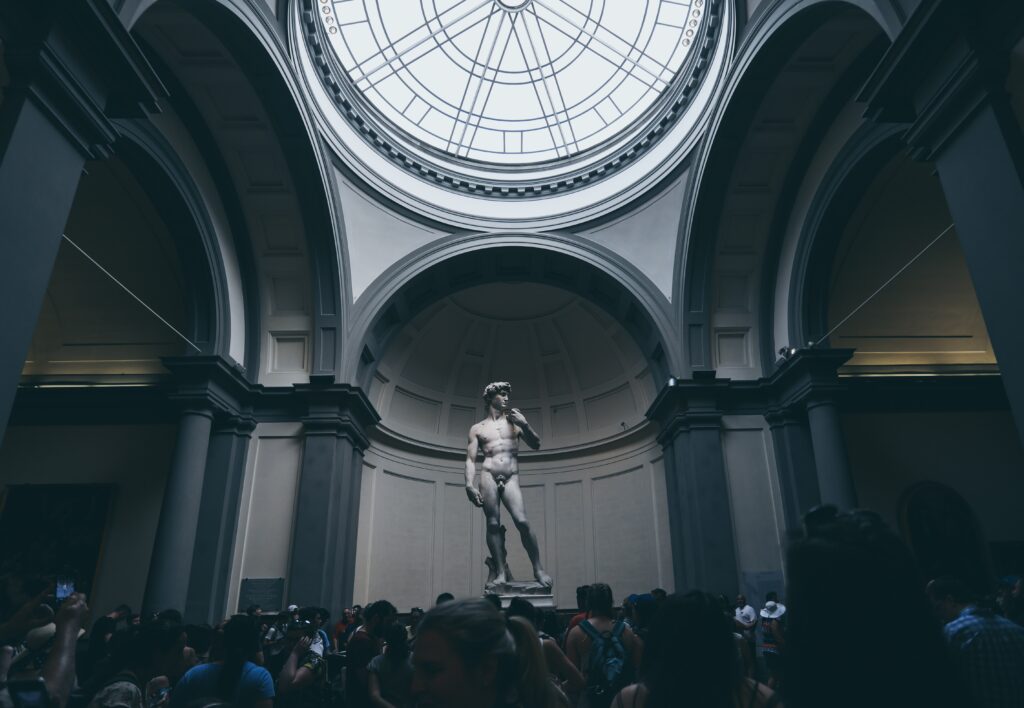
Michelangelo’s David lives in the Galleria dell’Accademia, generally open Tuesday through Sunday and closed Mondays. Hours and ticket policies shift from time to time, so check the official site before you go and book ahead if you can — this is one of the most visited sculptures in the world, and the line reflects it.
2. The Duomo
This is the dome atop Florence’s main cathedral. Construction finished in 1436, and it’s still the largest brick dome ever built — Filippo Brunelleschi wasn’t just an artistic genius, he was an engineering one too. Climbing to the top is an adventure: the staircase is narrow and winding, and you’ll usually have people ahead of and behind you the whole way (skip it if you’re claustrophobic). But if you make it up, the view from the top — and the close-up look at the paintings on the dome’s ceiling — is spectacular. Words don’t do it justice.
3. Cattedrale di Santa Maria del Fiore (Cathedral of Saint Mary of the Flowers)
The cathedral and the baptistery both sit in the Piazza del Duomo. Entrance to the cathedral is free, but dress appropriately — no short shorts, and shoulders must be covered. I remember studying this cathedral in art history and being amazed that people built something so large and magnificent so long ago. Seeing it in person did not disappoint.
4. Baptistery of St. John
This is one of my favorite parts of Florence, thanks to the beautiful Gates of Paradise and the history behind them. Back in 1401, there was a major competition for the commission to design the baptistery’s doors. A jury narrowed the field to seven finalists, including Donatello, Filippo Brunelleschi (see #2), and Lorenzo Ghiberti. Ghiberti won the commission at just 21 years old — a huge deal at the time — and by the time the doors were finished, he was twice that age. The panels depict New Testament scenes from the life of Christ, and the detail on each one is spectacular.
If you’re heading to see the David early in the morning and the baptistery is on the way, stop and take a good look then. Later in the day, crowds can block a clear view of the doors.
5. Palazzo Vecchio (Old Palace)
Located in the Piazza della Signoria, Palazzo Vecchio is the city’s town hall and has a copy of Michelangelo’s David standing in front of it. The inside holds a lot of art, though not much of it is widely known — worth a peek, but not necessarily the time it takes to see everything inside, unless you’re a serious art buff. The fountain to the left of the building, the Fountain of Neptune, is also worth a mention: sculptor Bartolomeo Ammannati made it, but Florentines apparently weren’t impressed, nicknaming it “the white giant” and even using it to wash laundry back in the late 1700s.
6. Loggia dei Lanzi
Right between Palazzo Vecchio and the Uffizi Gallery sits the Loggia dei Lanzi, a covered gallery full of famous statues. While we were looking at works like Giambologna’s Hercules Slaying a Centaur, my mom turned to me and said, “But these aren’t the REAL statues. They’ve got to be replicas — they wouldn’t just leave them out here.” I told her no, these are the originals. She didn’t believe me until we asked the guard. My favorite piece here is Giambologna’s Rape of the Sabine Women — in my book, he ranks right up there with Michelangelo.
7. All’antico Vinaio
By now, you’re probably starving, which means it’s time for a traditional Italian sandwich at All’antico Vinaio. Every sandwich pairs unique flavor combinations you’ve probably never tried before, like truffle cream, grilled eggplant, and pecorino cheese.
The sandwiches are huge and reasonably priced compared to a sit-down meal in Florence. It’s an order-at-the-counter spot, so even with a long line, you won’t wait long — they move fast.
8. The Uffizi Gallery
The Uffizi generally keeps the same Tuesday-through-Sunday hours as the Accademia, closed Mondays — check the current schedule and book tickets before you go. It’s almost unfair to squeeze the Uffizi onto a top-ten list: it’s so rich that you’d need many hours to see and appreciate it without rushing. If you can, give it its own day rather than folding it into a single whirlwind sightseeing day. If art isn’t your thing, that’s the one exception.
Sidenote: The Alcoves
One of the best parts of this world-famous museum is something you see before you even step inside. The alcoves lining the street outside the Uffizi highlight some of the most famous Italians in history, from Da Vinci to Ghiberti, and they’re worth a slow look as you walk by.
9. Ponte Vecchio (The Old Bridge)
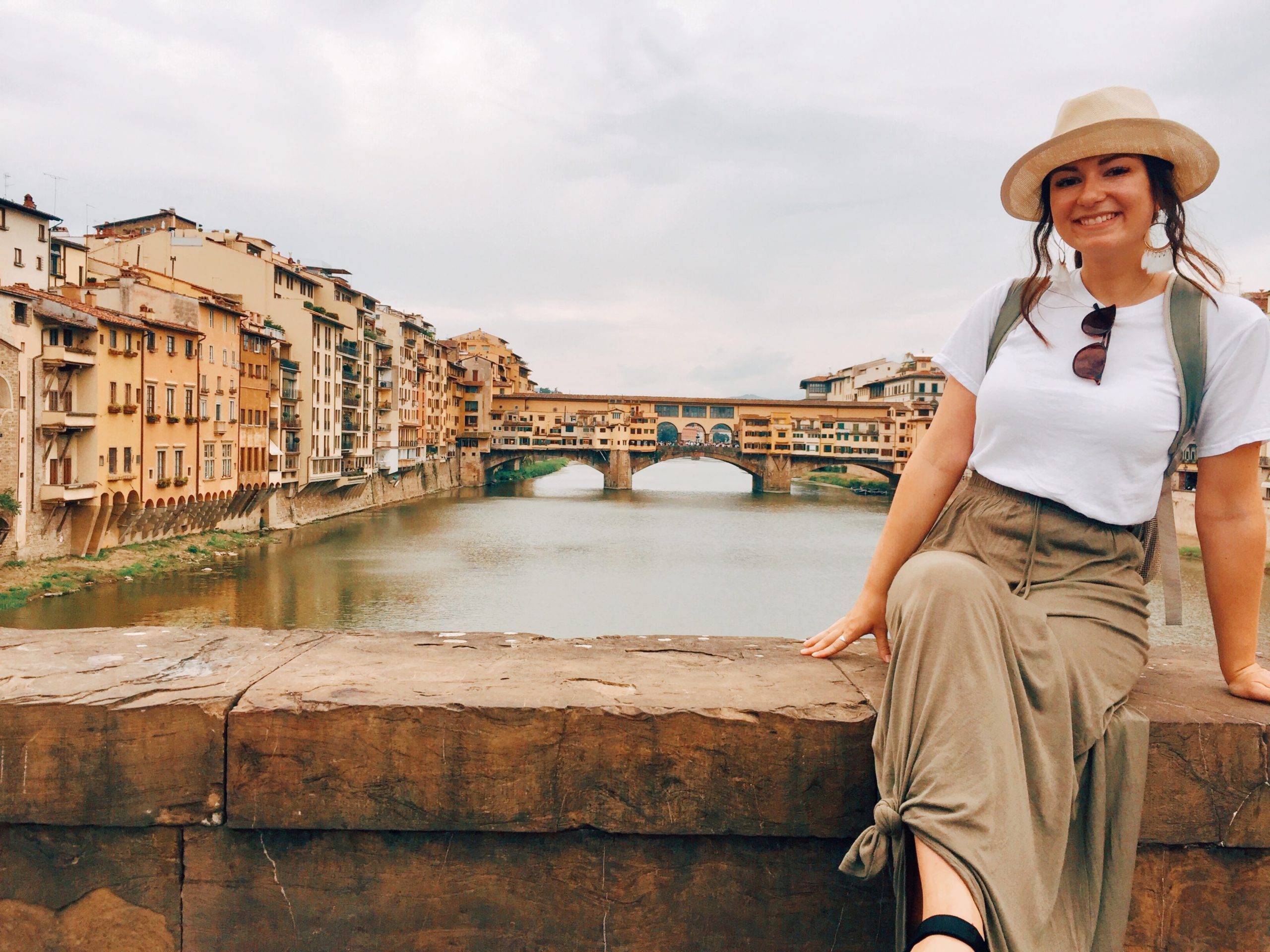
This is one of the most famous sights in Florence. The bridge spans the Arno River and is known for the shops built directly onto it — butchers once occupied these spaces, but today they’re mostly jewelry shops.
Another detail worth knowing: the padlocks that used to cover the bridge’s railings, left by couples who’d write their names, lock them on, and toss the key into the river. That tradition isn’t allowed anymore — locks get removed regularly because of the added weight and strain on the bridge and its structures, and leaving one can come with a fine — so admire the bridge, but don’t add to it.
10. Piazzale Michelangelo (Michelangelo Square)
This spot sits on the other side of the Arno. From the square, you get a beautiful view of the entire city of Florence, the river, the old walls, and the Tuscan countryside beyond.
Ten sights in one trip is a lot to pack into a short visit — one of the real perks of spending a few months as an au pair in Italy is having the time to see all of this without rushing, and to go back to your favorites more than once.
FAQ: Visiting Florence
How many days do I need to see the top sights in Florence?
Three to four days is enough to cover the major sights on this list without rushing, though the Uffizi Gallery alone can easily fill a full day for art lovers.
Do I need to book tickets in advance for the David or the Uffizi?
Both are extremely popular, and lines can be long, so booking ahead through the official museum websites is worth doing whenever possible, especially in busier seasons.
What should I wear to visit Florence’s cathedral?
Dress modestly: shoulders should be covered and shorts shouldn’t be too short. This applies to most churches and cathedrals across Italy, not just Florence’s Duomo.
Are the Accademia and Uffizi open every day?
Both museums are typically closed on Mondays, so plan the rest of your week around that before locking in other reservations.
If wandering Florence’s museums and piazzas on your own schedule sounds like the kind of life you want, living abroad as an au pair could be your way to get there.

Part of the Rome Abroad team helping young women live and work abroad as au pairs since 2015.


